Gold Ball Mill Manufacturer for Gold Ore Processing
A gold ball mill handles the grinding stage of a small or medium gold plant — taking crushed ore down to the particle size that releases gold for gravity, leaching or flotation recovery. Tell us your requirements and we will configure the mill and quote to match.
- Nine models from Φ900×1800 to Φ1830×4500, 0.65–12 t/h
- Feed up to 25 mm, discharge 0.074–0.89 mm
- Motor power 18.5–155 kW
- Wet or dry grinding, overflow or grate discharge
Gold ball mill overview
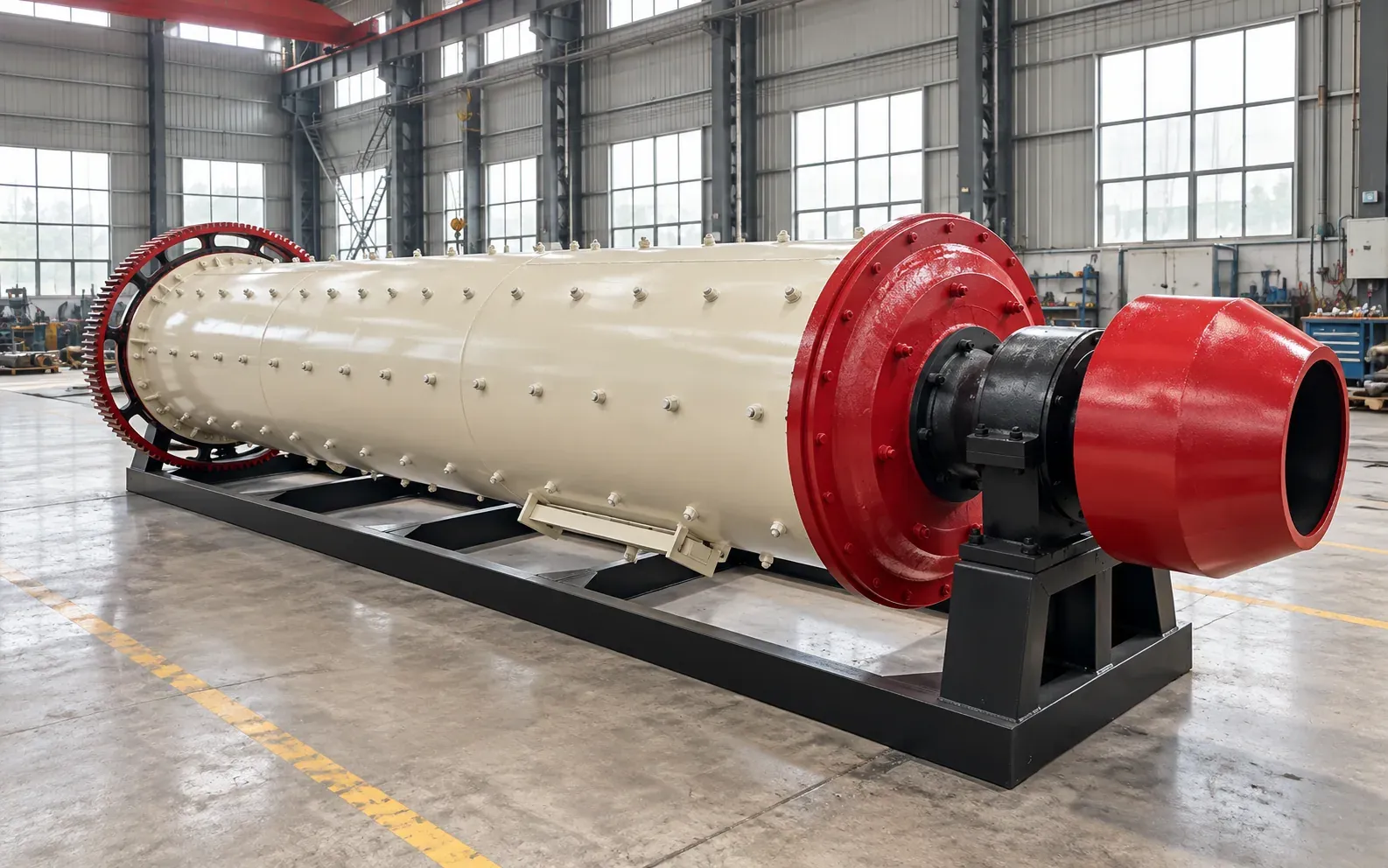
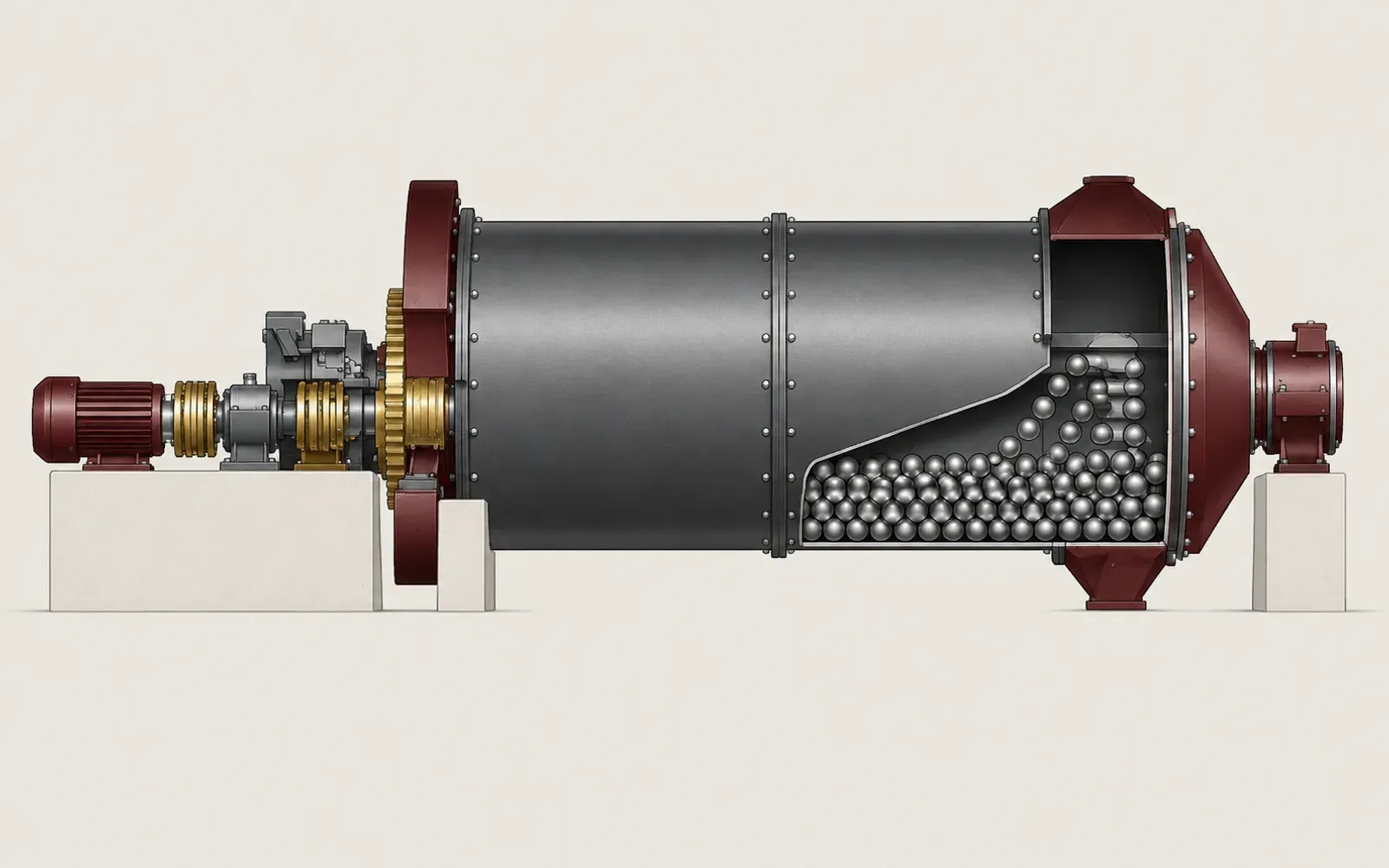
A gold ball mill is a horizontal rotating grinding machine that uses a charge of steel balls to grind crushed gold ore—wet or dry—to the particle size your recovery circuit needs.
ZD Mining manufactures nine reference models from Φ900×1800 to Φ1830×4500, covering 0.65–12 t/h. Send your ore type, feed size and target throughput, and we will match the model, discharge, liners and media package before quoting.
What's included
- Bolted manganese-steel liners, replaced segment by segment at planned maintenance stops
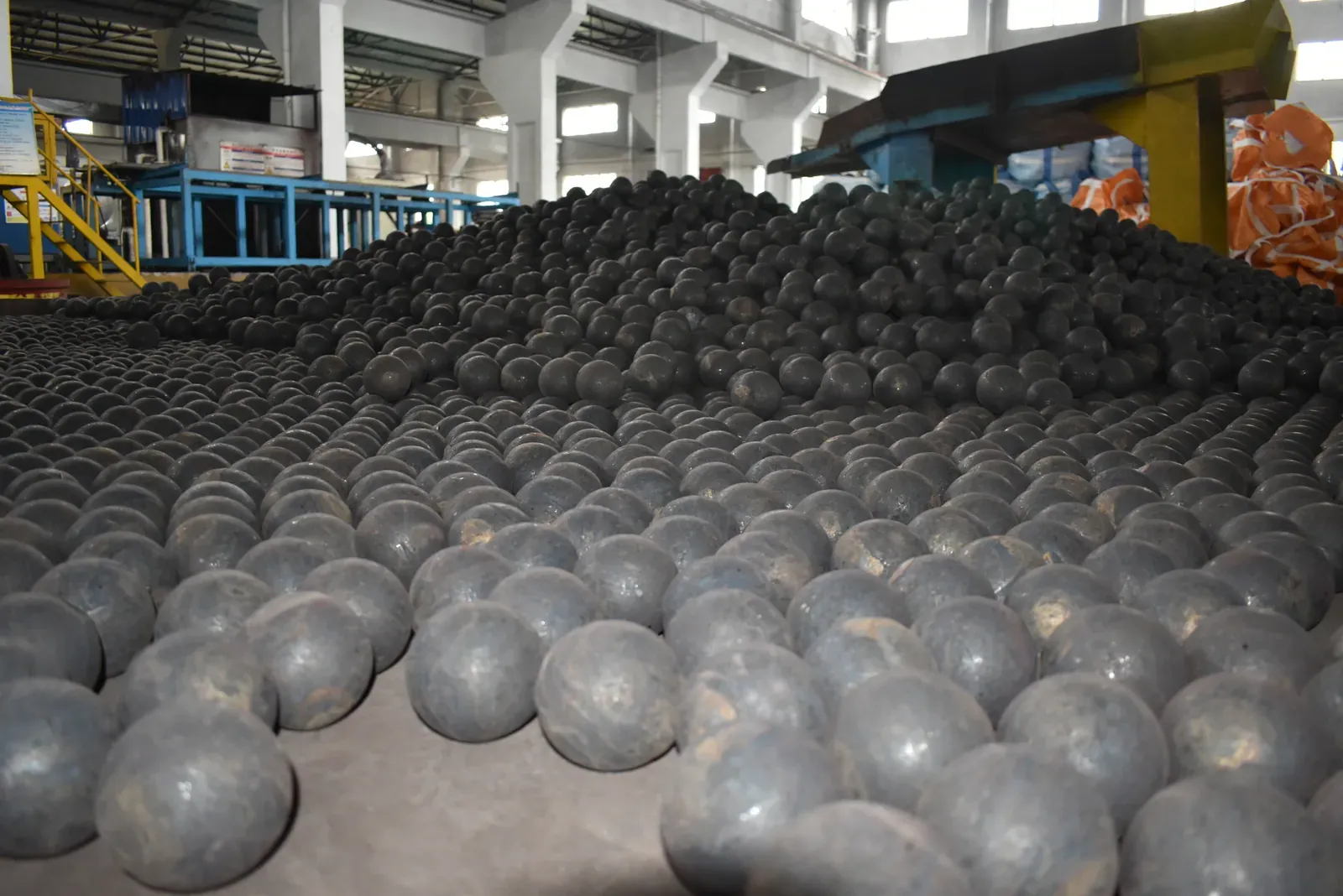
- Optional first grinding-ball charge, sized to your feed and target grind
- Optional discharge screen for oversize control before classification
- Motor power and electrical options matched to your site supply
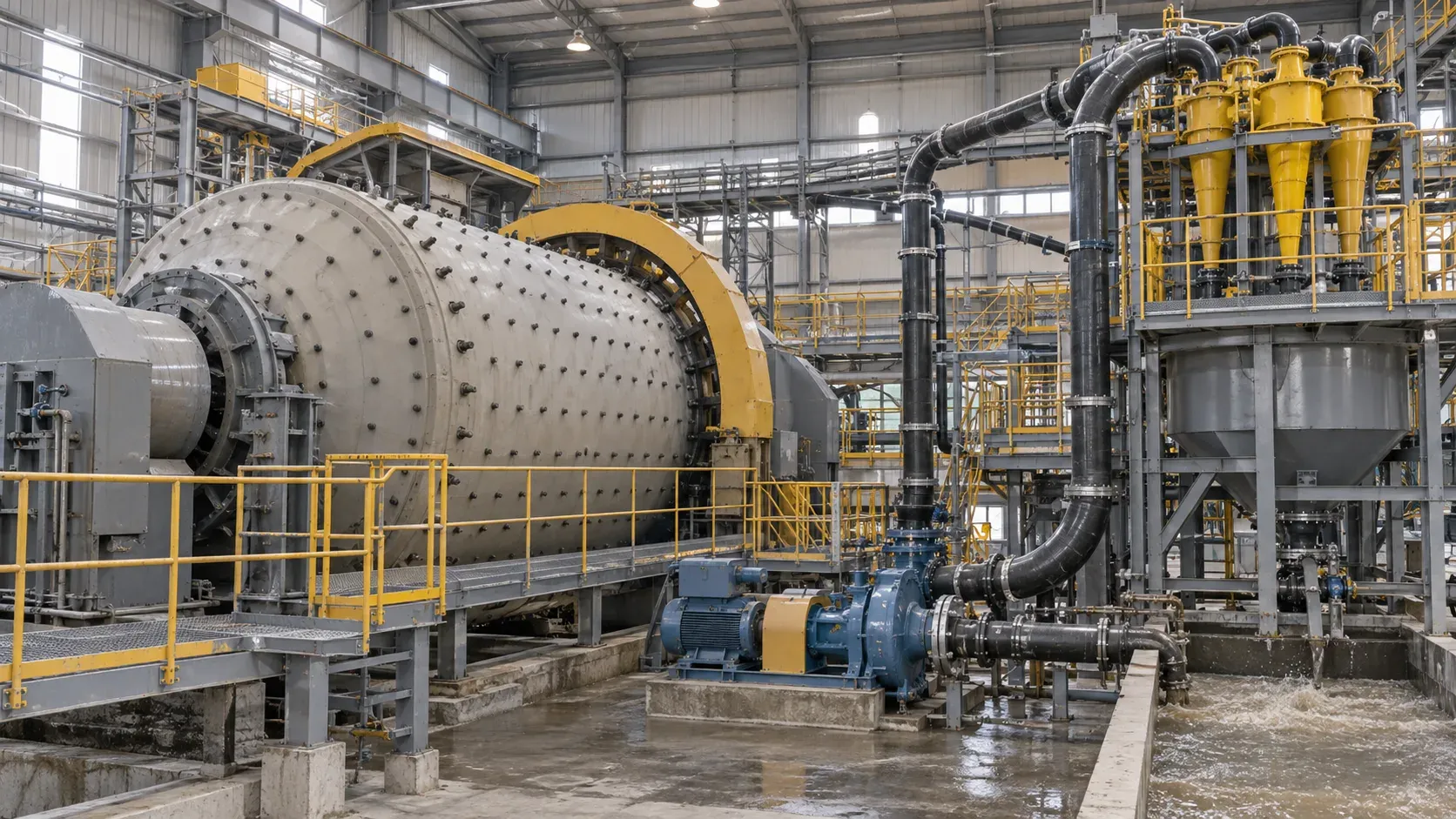
Specifications
Use these reference models to start a technical discussion. Final capacity depends on ore competency, feed distribution, target product size, circulating load and site conditions.
| Model | Feed ≤ mm | Discharge mm | Capacity t/h | Motor kW | Weight t |
|---|---|---|---|---|---|
| Φ900×1800 | 20 | 0.075–0.89 | 0.65–2 | 18.5 | 5.8 |
| Φ900×3000 | 20 | 0.075–0.89 | 1.1–3.5 | 22 | 6.8 |
| Φ1200×2400 | 25 | 0.075–0.60 | 1.5–4.8 | 30 | 12 |
| Φ1200×3000 | 25 | 0.074–0.40 | 1.6–5 | 37 | 13.2 |
| Φ1200×4500 | 25 | 0.074–0.40 | 1.6–5.8 | 55 | 13.7 |
| Φ1500×3000 | 25 | 0.074–0.40 | 2–5 | 75 | 16.5 |
| Φ1500×4500 | 25 | 0.074–0.40 | 3–6 | 110 | 21 |
| Φ1830×3000 | 25 | 0.074–0.40 | 4–10 | 130 | 34.5 |
| Φ1830×4500 | 25 | 0.074–0.40 | 4.5–12 | 155 | 38 |
Reference data is for preliminary selection. A final recommendation should be confirmed with ore data and the complete process route.
Advantages
The components that wear first—liners, gears, bearings—decide how dependable a mill stays after year one. Ours are specified for long, low-cost service.
Wear-resistant liners
Impact- and abrasion-grade liner segments hold their profile longer, keeping grinding efficiency stable between planned changes.
Built for 24-hour duty
Thick shell and end plates with machined flange joints keep the mill running true through continuous operation.
Durable gear drive
Machined girth gear and pinion in an enclosed, lubricated drive transmit full torque with slow, predictable wear.
Long-life bearings
Oversized journals and thin-oil lubrication carry the load with less friction, running cooler and lasting longer.
Lower energy per tonne
A motor, speed and media charge matched to your ore grind more tonnes per kilowatt-hour than a mis-sized mill.
Easy, low-cost upkeep
Bolted liner segments and accessible lubrication points keep daily checks short and planned stops predictable.
Project-based mill selection
Share ore type, feed size, throughput and target grind. We recommend the mill configuration and discharge route around the complete process.
One responsible supply scope
Mill body, drive, liners, steel balls and necessary auxiliaries are scoped together, helping prevent interface gaps between suppliers.
Clear pre-shipment checks
Key components and the completed assembly are checked before packing, so the delivered equipment matches the agreed technical scope.
Export-ready delivery support
Container loading, export packing and shipping documents are planned around the equipment dimensions and your delivery requirements.
Factory and delivery
A closer look at factory assembly, component preparation and export loading before delivery.
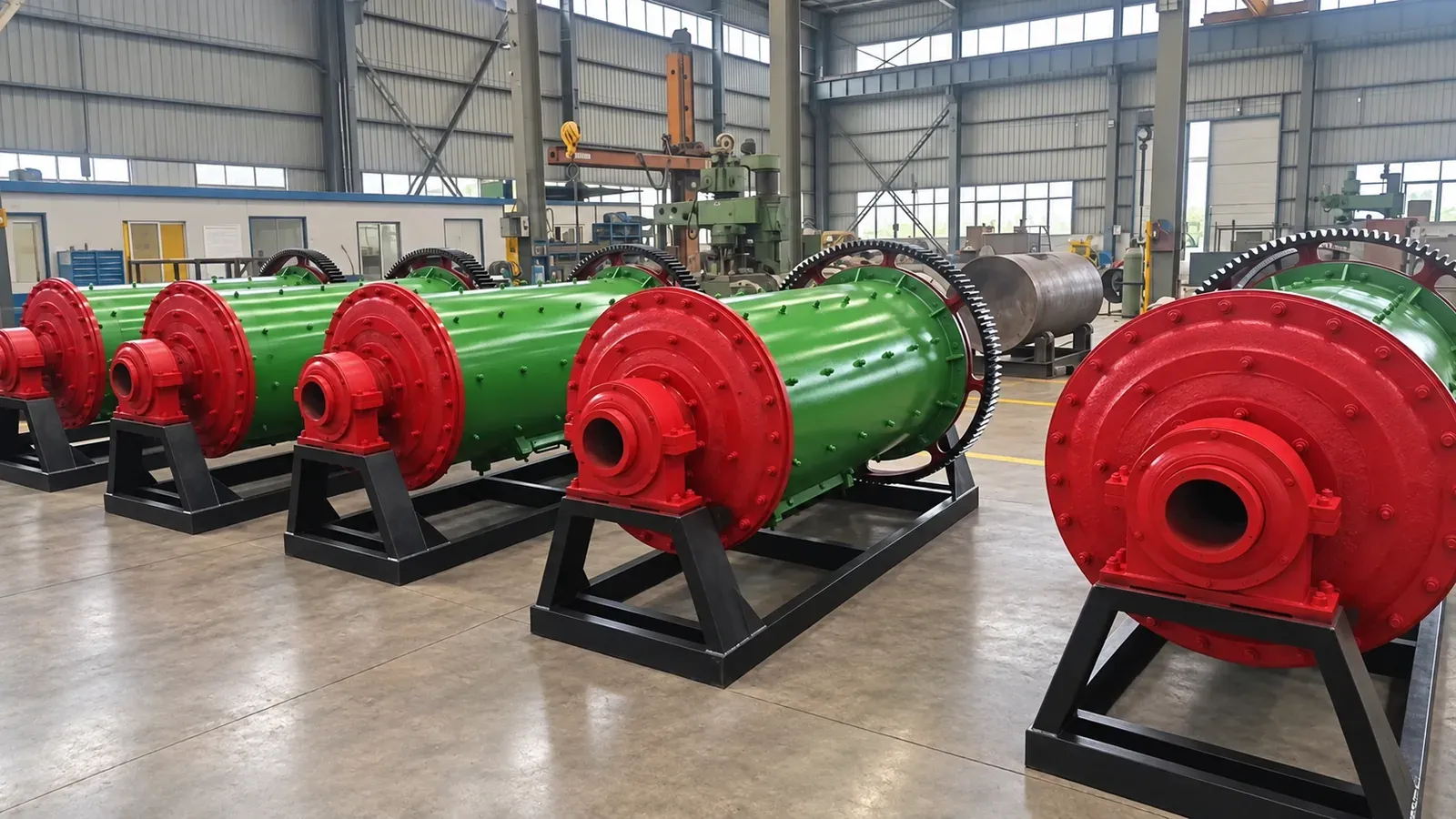
Factory assembly
Finished mill bodies presented for final checks.
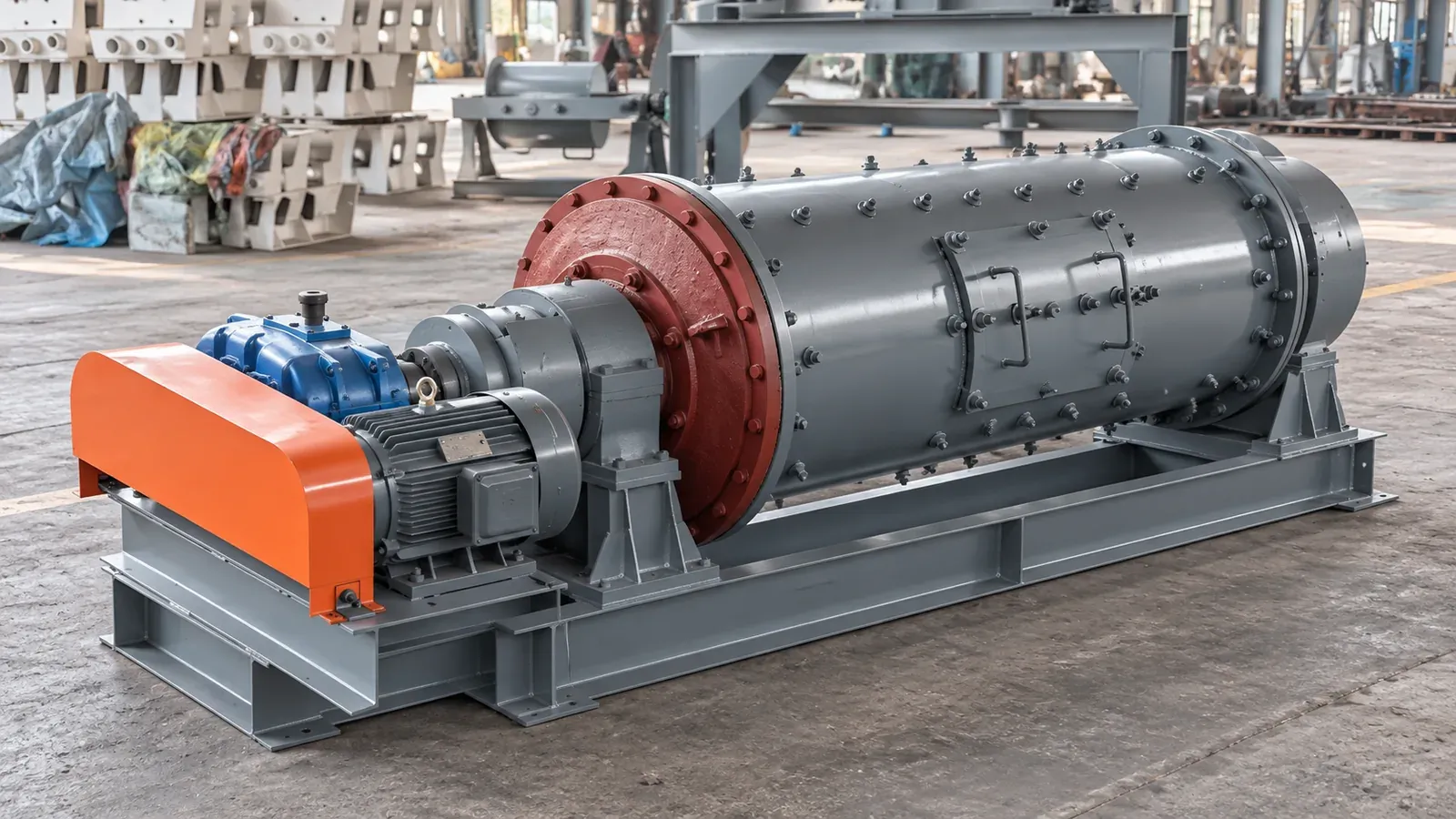
Drive assembly
Complete drive and mill assembly before commissioning.
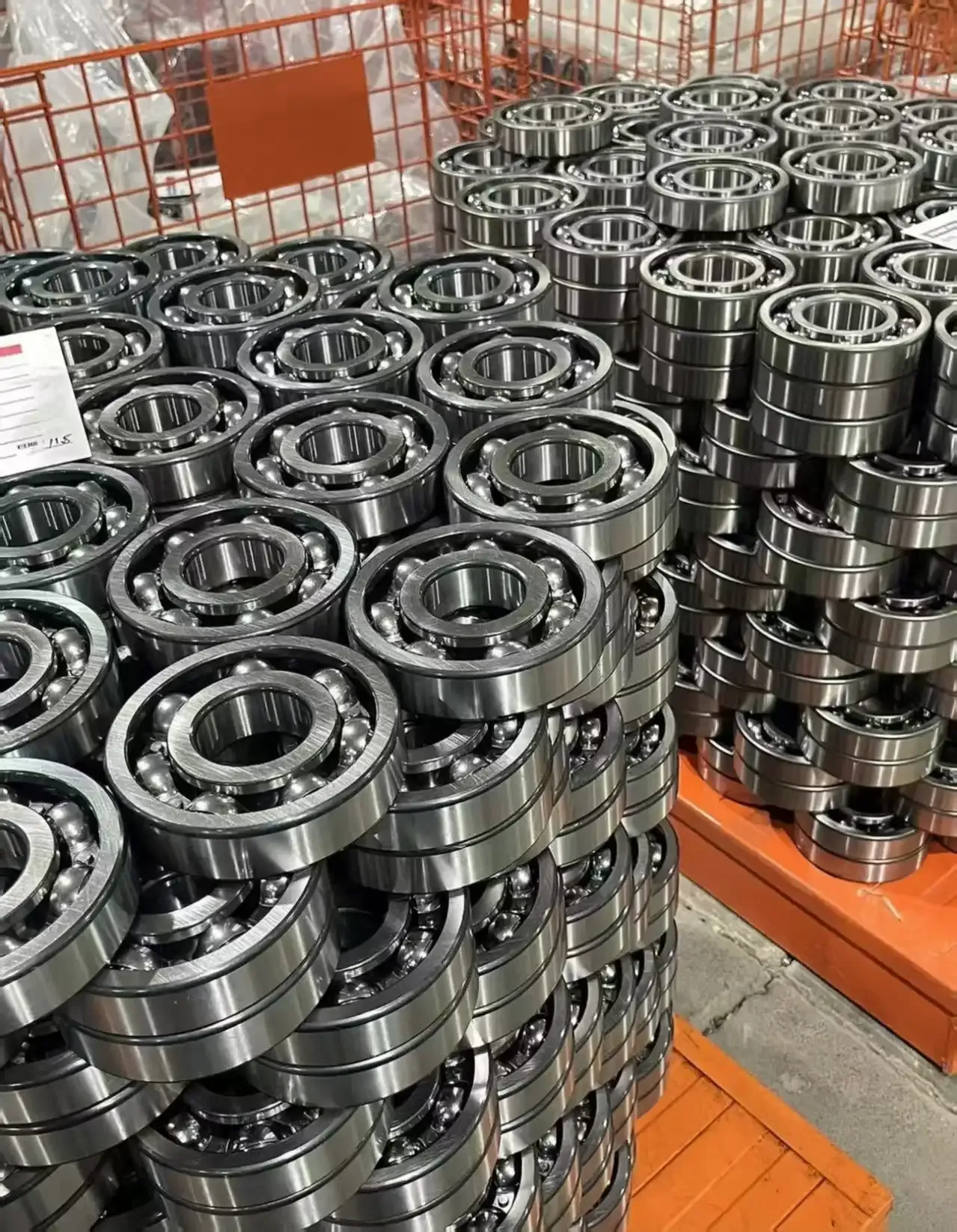
Component preparation
Critical bearing components organised for production.
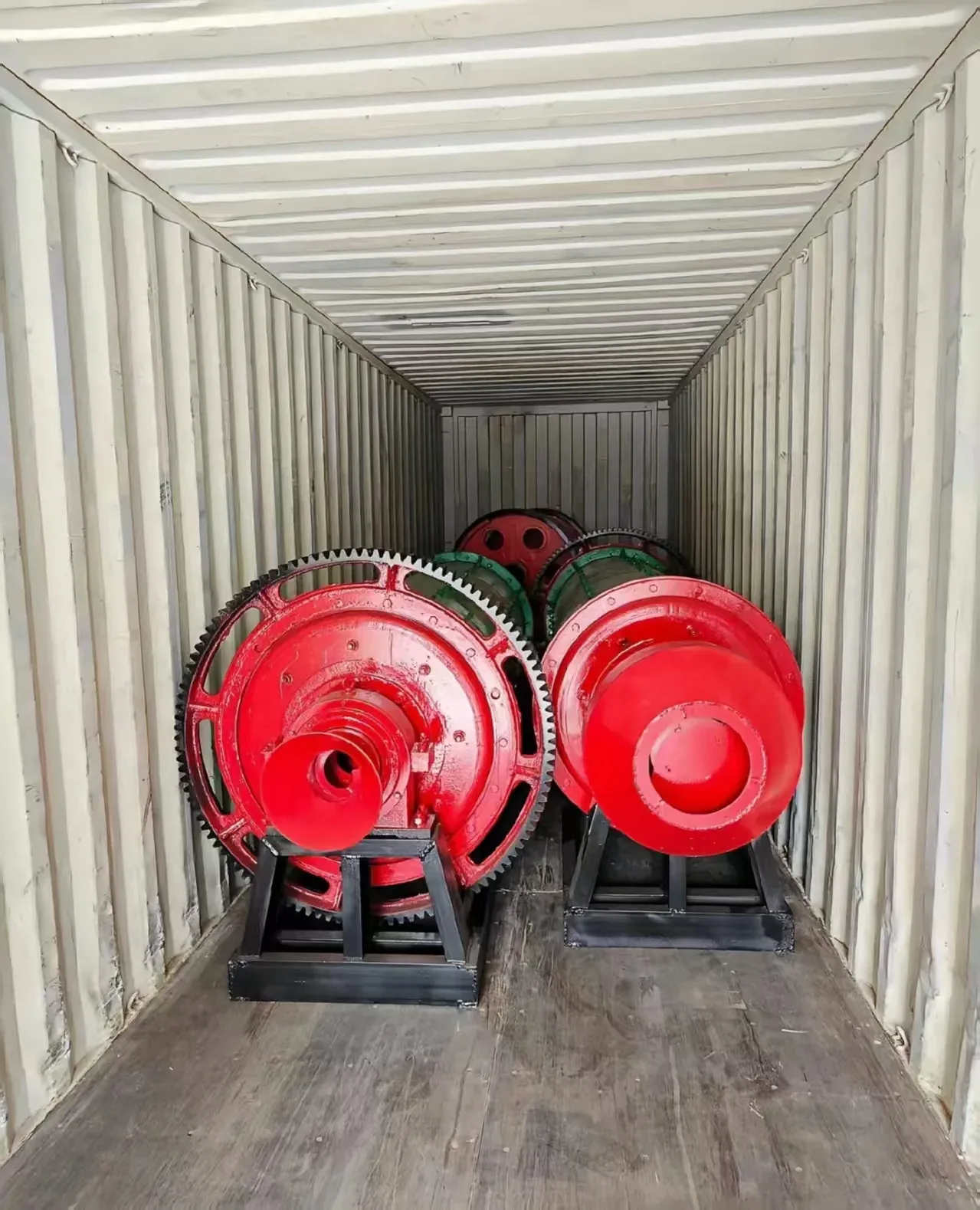
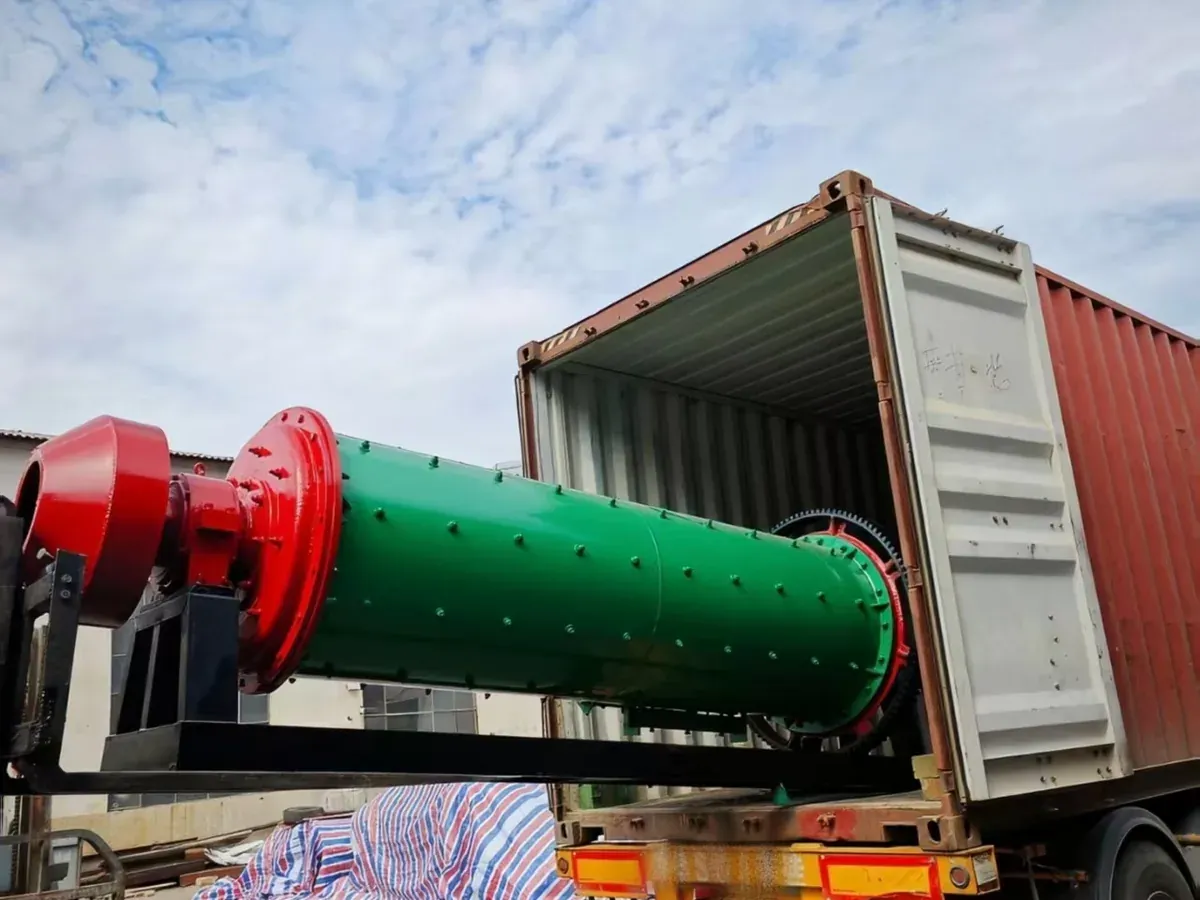
Export loading
Container and truck loading prepared for export transport.
FAQ
Key operating and supply questions for selecting a gold ball mill.
What size ball mill does my plant need?+
Start from your target tonnes per hour, then shortlist from the model table—not the other way round. As a practical guide, a small gravity plant grinding 1–2 t/h usually lands on a Φ900–Φ1200 mill, while 4–12 t/h continuous circuits call for Φ1500–Φ1830. Add about 20% capacity headroom for growth rather than buying at your exact limit, and confirm the final size against ore hardness and feed size. Send us your daily tonnage and we will size the mill for you.
How fine can a gold ball mill grind gold ore?+
Standard models grind to 0.075–0.15 mm—roughly 100–200 mesh—which covers gravity concentration, flotation and leaching feed duties. Fineness is controlled through the media mix and classification: tell us your target P80 and the recovery circuit, and the grind will be set around it.
Should I choose wet or dry grinding?+
For gold recovery circuits the practical answer is wet: it feeds classification, gravity concentration, flotation and leaching directly, uses less power per tonne and keeps dust out of the air. Choose dry grinding only when water is severely restricted or the product must leave the plant as a dry powder—and then dust collection and material handling must be planned into the scope.
Can the ball mill run on diesel power?+
Yes. Any model in the range can be paired with a diesel generating set for off-grid sites. Size the generator about 20–30% above the motor rating to absorb starting load, and confirm site altitude and ambient temperature so the set is correctly rated for your conditions.
How many steel balls does the mill need?+
A working charge fills roughly 30–40% of the mill volume, loaded as a graded mix of large, medium and small balls rather than a single size. Exact tonnage and size ratio depend on feed size and target grind; we specify the complete charge list with the quotation, and scheduled top-ups keep the charge in balance.
How much does a gold ball mill cost?+
Price is driven mainly by steel weight and motor size, so it scales with the model and its configured scope rather than a fixed rate. The smallest Φ900 models start at around US$10,000, and cost rises gradually through the Φ1500–Φ1830 range as drive, liner and auxiliary scope grow. As a factory-direct supplier with no trading-company markup, we confirm each quotation against your ore, scope, packing and delivery terms.
How long does production and delivery take?+
Standard models are typically ready within 7–15 working days after order confirmation. Ocean transit adds roughly 10–25 days to Southeast Asia, 15–30 days to West Africa and 20–35 days to South America depending on the port, and full tracking documents are provided once the shipment leaves the factory.
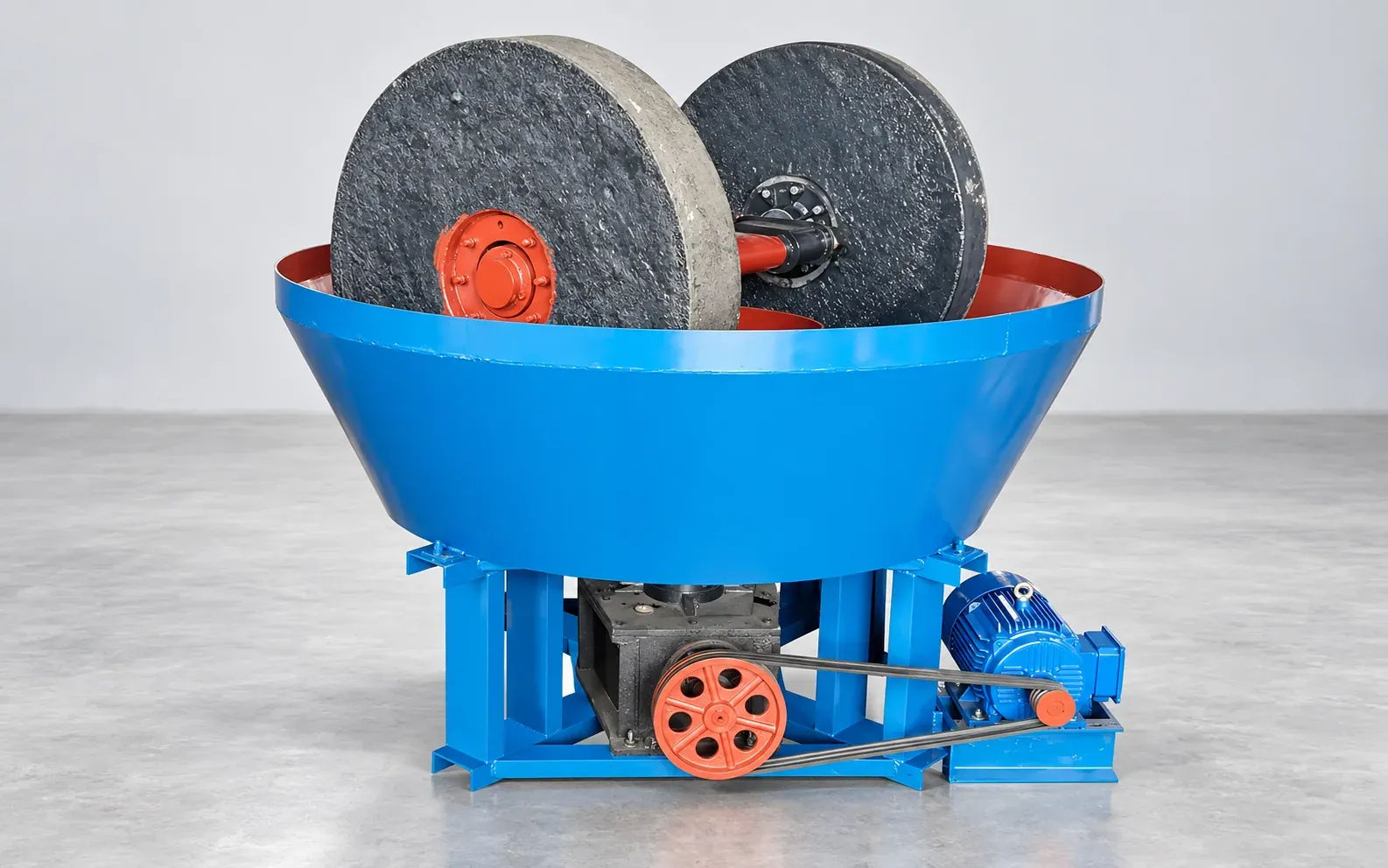
Ball mill or wet pan mill—which should I choose?+
Choose the ball mill for hard ore, higher throughput and a finer, more consistent grind—it lifts recovery in serious gravity, flotation or leaching circuits. The wet pan mill stays attractive for simple, low-capacity, budget installations. Between the two? Send your ore hardness and hourly target and we will tell you which pays back faster.
REQUEST A QUOTE
Share your requirements and receive a clear quotation for your project.
- Direct factory supply
- Technical configuration support
- Export packing and documents
- Parts and after-sales support